

Did you know 3.6 million eviction cases happen every year in the U.S.? Knowing how to evict a tenant the right way is key. It helps landlords protect their property and avoid legal trouble.
The eviction process is complex. It involves following legal steps and knowing tenant rights. It can be tough and emotional, with big consequences if not done right.
To manage property well, you need to know the eviction process inside out. Landlords must follow the law to remove tenants who break the lease or don’t pay rent.
Key Takeaways
- Understand the specific legal requirements for tenant eviction
- Document all lease violations thoroughly
- Follow proper notice procedures precisely
- Avoid illegal self-help eviction methods
- Protect both landlord and tenant rights throughout the process
- Maintain professional and objective communication
- Consult legal professionals if complications arise
Understanding Tenant Rights in the United States
Understanding tenant rights is complex. It involves knowing about housing law and legal protections. The U.S. has strong laws to protect renters from unfair treatment and discrimination.
Tenant rights cover many legal protections. They ensure fair housing and safe living conditions. These rights differ in each state, affecting renters and property owners differently.
Overview of Tenant Rights
Key tenant rights include:
- Right to a habitable living space
- Protection against unlawful eviction
- Privacy and quiet enjoyment of the rental property
- Non-discriminatory treatment
Fair Housing and Anti-Discrimination Laws
Federal and state laws ban housing discrimination. These laws protect people from unfair treatment based on:
- Race
- Gender
- Religion
- National origin
- Disability
- Family status
| Legal Protection | Key Provisions |
|---|---|
| Fair Housing Act | Prevents discrimination in housing transactions |
| URLTA | Standardizes landlord-tenant relationships |
| State-Specific Laws | Provide additional tenant protections |
Landlords must understand these rights to avoid costly legal complications during the eviction process. Discriminatory practices can lead to significant financial penalties and lawsuits.
Reasons for Eviction
Managing rental properties needs clear rules for kicking out tenants. Landlords must know when it’s okay to end a lease.
Non-Payment of Rent
The top reason for eviction is non-payment of rent. Most evictions happen because of this. Managers send out eviction notices after tenants don’t pay rent.
Lease Violations
Breaking the lease can lead to big problems. Common issues include:
- Having pets without permission
- Making too much noise
- Subletting without okay
- Not keeping the property clean
Illegal Activities
Doing illegal things is a big no-no. It includes:
- Drug crimes
- Crime on the property
- Damaging the property
- Being mean to others
| Eviction Reason | Typical Notice Period | Legal Complexity |
|---|---|---|
| Non-Payment of Rent | 3-5 Days | Low |
| Lease Violations | 7-30 Days | Medium |
| Illegal Activities | Immediate | High |
Landlords must keep records of lease breaks. This helps make sure evictions are legal. Keeping to the lease rules is key to protecting property.
Review Your Lease Agreement
A good lease agreement is key for a smooth relationship between landlords and tenants. It’s also important for the eviction process. Landlords need to make sure their lease terms are clear and protect their rights.
Importance of Lease Terms
The lease agreement is a legal contract. It outlines what both parties can and cannot do. If there’s an eviction, a detailed lease makes things easier in court.
- Clearly define rent payment expectations
- Specify acceptable property use
- Outline consequences of lease violations
- Include specific terms for termination
Identifying Breach of Contract
It’s important for landlords to know when a tenant breaks the lease. Not all breaches are created equal. Keeping good records is key to winning in court.
- Track and document all lease violations
- Maintain detailed communication records
- Understand the difference between curable and non-curable breaches
- Provide written notice of violations
In California, eviction can take 30 to 45 days. Mistakes in the lease can make this longer. This can lead to cases being thrown out or big delays.
Landlords should talk to lawyers. This helps make sure their lease is right and safe from legal problems.
Preparing for Eviction
Going through the eviction process needs careful planning and the right documents. Landlords must collect solid evidence to support their case. It’s key to know the important steps in documentation before starting legal actions.
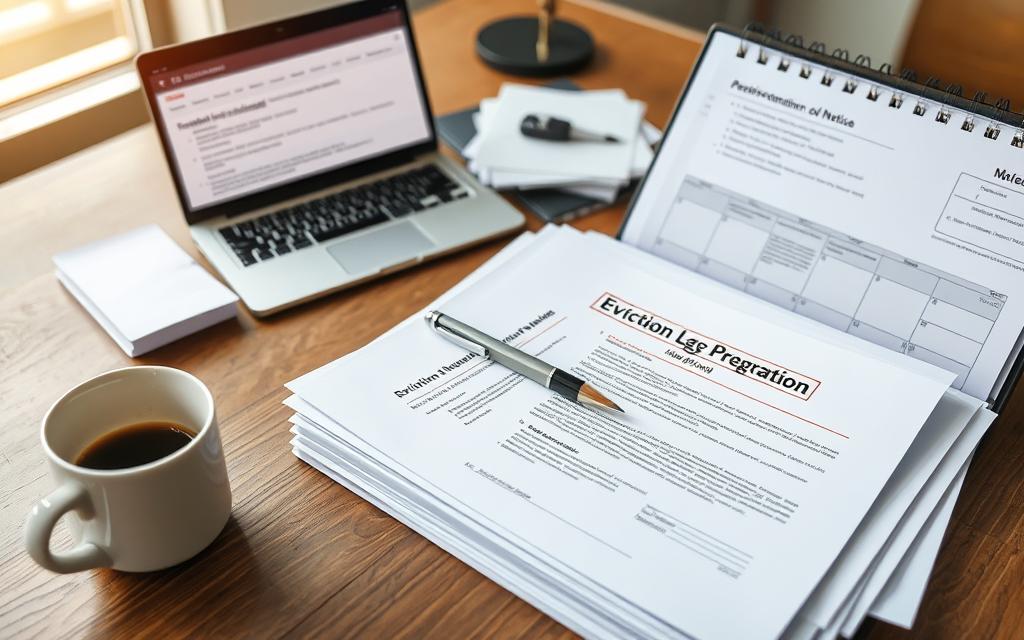
Before an eviction, landlords should gather all the evidence they can. This evidence should show that the tenant broke the lease. An eviction lawyer suggests getting these documents:
- Photographic evidence of property damage
- Written communication records
- Financial documents showing missed rent payments
- Lease agreement copies with highlighted violations
- Witness statements if applicable
Critical Documentation Strategies
Tenant rights and landlord rights are balanced by good legal documents. Keeping records well-organized can really help your case. Make a file that lists:
- Date of initial lease agreement
- All communication attempts with the tenant
- Specific instances of lease violations
- Proof of notice delivery
Studies show landlords who document well win 50% more often in court. An experienced eviction lawyer can help you follow all the rules.
Evidence Gathering Techniques
When gathering evidence, aim for objective and verifiable information. Bank statements for missed rent, email chats, and proof of property damage are key. Stay away from emotional or biased statements that can hurt your case.
Good preparation is key to a successful eviction. Talking to a professional eviction lawyer can give you tips for your area.
Serving an Eviction Notice
Understanding eviction laws and notice rules is key. Landlords must follow legal steps to remove tenants properly.
The eviction process starts with a formal notice to the tenant. There are different notices for various reasons.
Types of Eviction Notices
- Pay or Quit Notice: For when rent isn’t paid
- Cure or Quit Notice: Gives tenants a chance to fix issues
- Unconditional Quit Notice: Requires tenants to leave right away
Legal Requirements for Notices
Each state has its own rules for eviction notices. Important parts include:
- Written notice that meets state standards
- Correct ways to deliver the notice
- Following state timelines
| Notice Type | Typical Notice Period | Common Reasons |
|---|---|---|
| Non-Payment Notice | 3-7 days | Unpaid rent |
| Lease Violation Notice | 7-30 days | Rule breaches |
| Month-to-Month Termination | 28-30 days | Lease ending |
Serving the Notice
Serving the notice right is very important. Landlords can use:
- Personal delivery
- Certified mail
- Posting on property
- Process server
Keeping a record of how you served the notice helps. It makes sure your eviction can go through.
Filing an Eviction Lawsuit
When a tenant won’t leave after an eviction notice, a lawsuit is needed. This step is key for landlords to follow the law and act professionally.
Knowing how to file a lawsuit is important. It involves several key steps:
- Check if the tenant has fixed the lease problem
- Find the right court to file in
- Gather all the proof of lease issues
- Fill out the eviction complaint forms
Selecting the Correct Court
Landlords must file in the county where the property is. Most courts handle these cases in their civil or small claims sections.
Completing Necessary Forms
Having the right documents is key. You’ll need:
- Eviction complaint form
- Summons document
- Proof of notice given
- Copy of the lease
Filing Fees and Costs
Filing a lawsuit costs money. In Florida, you might pay:
- Court filing fee: About $185
- Summons fee: $10 per person
- Sheriff service fee: $30-$50
Pro tip: Keep good records and make sure your documents are correct. This helps avoid your case being thrown out.
Court Hearing Procedures
Understanding court hearing procedures is key for landlords. It helps them protect their rights and treat tenants fairly.
Before an eviction hearing, landlords need to gather all important documents. They must prepare well and present their evidence clearly.
Preparing for the Hearing
Here are some important steps to prepare:
- Organize all important documents, like lease agreements
- Collect proof of lease violations or non-payment
- Make a timeline of events
- Think about getting a lawyer
What to Expect at the Hearing
Eviction hearings follow a set process. Landlords should know what to expect:
| Stage | Description | Typical Duration |
|---|---|---|
| Case Introduction | Landlord presents initial complaint | 15-20 minutes |
| Evidence Presentation | Documentation and witness testimony | 30-45 minutes |
| Tenant Defense | Tenant’s opportunity to respond | 20-30 minutes |
| Judicial Decision | Judge’s ruling on eviction | 10-15 minutes |
About 25% of evictions go to court. Landlords who follow the law have an 80% chance of winning.
Landlords should be professional, present clear evidence, and know local laws. The hearing is a chance to show they followed the law and have a good reason for eviction.
Judgment and Post-Judgment Actions
Understanding the final stages of eviction is key. Knowing what happens after a judgment is made is important. This affects the rental property and the tenant’s stay.

- Court issues a judgment for possession of the property
- Tenant receives a specific deadline to vacate
- Monetary judgments for unpaid rent may be awarded
- Legal documentation for removal is prepared
Understanding Court Judgments
Legal steps end in a court judgment. This gives clear instructions. Virginia law sets timelines for what happens next.
Usually, tenants have 10 days to leave after the judgment. This is before any further legal steps.
Potential Outcomes
The court can make different judgments:
- Full judgment in landlord’s favor
- Partial judgment with conditions
- Dismissal of the eviction case
- Monetary compensation for unpaid rent
If the tenant doesn’t leave, landlords can get a writ of possession. This lets law enforcement remove the tenant. The sheriff must give 72 hours notice first.
Landlords must pay fees for these actions. This includes court and sheriff costs. Following legal steps is important for success.
Handling Appeal Processes
Understanding tenant eviction laws can be hard. This is true when a tenant wants to fight an eviction notice. The appeal process is a key legal way for tenants to defend themselves against eviction.
If a tenant loses in court, they have rights to appeal. Knowing how to appeal is important for both landlords and tenants.
Tenant’s Right to Appeal
Tenants can fight an eviction in several ways:
- File an appeal within 30 days of the court’s decision
- Pay a required appeal bond
- Submit documents that challenge the eviction notice
- Show that the eviction process had errors
How to File an Appeal
The steps to file an appeal are important:
- Submit a formal appeal request to the court
- Pay the required appeal bond within five days of the judgment
- Provide evidence to support the appeal
- Attend the scheduled appeal hearing
| Appeal Stage | Timeline | Key Requirements |
|---|---|---|
| Initial Filing | Within 30 days | Completed appeal form |
| Bond Payment | Within 5 days | Full appeal bond amount |
| Evidence Submission | Before hearing | Supporting documentation |
Note: Tenants must carefully document and present their case to increase the likelihood of a successful appeal in tenant eviction laws.
Coordinating the Actual Eviction
The final step in an unlawful detainer process needs careful planning. Landlords must follow the right steps to remove tenants. A court order alone does not mean they can do it themselves.
Before an eviction, landlords must team up with local police. This ensures the eviction is done legally and smoothly. The eviction court gives clear rules to follow.
Scheduling with Law Enforcement
Police are key in carrying out an eviction. Only trained sheriff’s deputies can remove a tenant. Landlords should:
- Contact the local sheriff’s office with the court-issued eviction order
- Provide all necessary documentation for the unlawful detainer
- Schedule a specific date and time for the removal
Preparing for the Move-Out
Getting ready for an eviction is very important. Landlords need to make a detailed plan. This includes:
- Documenting the property’s current condition
- Preparing to change locks after tenant removal
- Understanding legal requirements for handling abandoned possessions
| Action Item | Recommended Procedure |
|---|---|
| Law Enforcement Coordination | Contact sheriff’s office 1-2 weeks before scheduled eviction |
| Property Documentation | Take detailed photos and videos of property condition |
| Tenant Belongings | Follow state-specific guidelines for storing or disposing of items |
Important: Always follow the law during the eviction process. This helps avoid legal problems.
Dealing with Personal Property After Eviction
Handling tenant belongings after an eviction is tricky. Landlords must know their rights and follow the law. This helps avoid legal trouble.
Landlords need to follow steps to protect their interests and respect tenant rights. An eviction attorney can guide them through this process.
Laws Surrounding Tenant’s Belongings
State laws differ on handling abandoned property. Landlords must document and list all items left behind. Important things to remember include:
- Photographing and cataloging all personal belongings
- Storing valuable items for a set time
- Notifying the tenant about getting their property
- Following state rules for keeping property
Timeline for Removal of Property
The steps for handling tenant belongings are key:
- Write to the tenant about the property
- Give them time to get their property
- Keep records of all contact with the tenant
Caution is key. Getting rid of tenant belongings wrong can lead to legal trouble. Landlords should check local laws and might need an eviction attorney’s help.
Different states have different rules for abandoned property. Some say how long to keep it, others let you throw it away right away. Knowing these rules is important for landlords to protect themselves and avoid legal fights.
Preventing Future Evictions
Managing rental properties well is key to avoiding evictions. By planning ahead, landlords and tenants can avoid legal troubles. This helps keep everyone safe and happy.
Screening Tenants Effectively
Checking tenants carefully is very important. It helps find good tenants who will follow the rules. This way, everyone can live peacefully.
- Conduct detailed background checks
- Verify employment and income sources
- Check credit history and rental references
- Perform in-person interviews

Drafting Strong Lease Agreements
Having clear lease agreements is vital. They set out what’s expected of both sides. This helps avoid problems and keeps landlords safe.
| Lease Agreement Components | Purpose |
|---|---|
| Rent Payment Terms | Define clear payment schedules and consequences |
| Property Use Restrictions | Outline permitted and prohibited activities |
| Maintenance Responsibilities | Clarify tenant and landlord obligations |
| Termination Conditions | Specify grounds for lease termination |
Using smart strategies can lower eviction risks. Regular property inspections and talking openly with tenants help build good relationships.
Even with these steps, landlords should know the latest eviction laws. They should also be ready for any surprises.
Conclusion: Importance of Following Legal Steps
Dealing with landlord-tenant disputes needs a smart and legal plan. Knowing the housing law is key for a proper eviction notice. The eviction process is very detailed. Small mistakes can stop the legal action and cost landlords a lot of money.
Professional process servers help make sure all legal steps are followed. About 80% of eviction cases fail because of wrong service. This shows how important it is to follow the rules, like California’s Tenant Protection Act of 2019.
Summary of Key Legal Steps
Good property management means knowing the legal rules for landlords and tenants. Landlords must give the right notices and keep all documents. They also need to follow local rules carefully. This way, they can avoid problems and keep their property safe while treating tenants fairly.
Final Advice for Landlords
Getting help from a good eviction lawyer is very helpful. The best way is to talk clearly, keep all records, and know the latest laws. Eviction should be a last choice. Try to solve problems in other ways first.




+ There are no comments
Add yours