

In Georgia, landlords must give 60 days’ notice before raising rent. This shows how complex rent increase laws are in the U.S. It’s important for both tenants and landlords to know their rights.
Raising rent isn’t simple. Each state has its own rules for when and how to give a rent increase notice. Landlords can change rent, but they must do it legally.
Laws on rent increases help both sides. They make sure prices are fair and communication is clear. Most places need a notice of 30 to 90 days before raising rent. This depends on the state and the rental agreement.
Key Takeaways
- Landlords must provide written notice before increasing rent
- Notice periods vary by state and type of rental agreement
- Rent increases during an active lease term are typically prohibited
- Discriminatory or retaliatory rent hikes are illegal
- Tenants have rights to challenge improper rent increases
- Lease agreements play a critical role in rent adjustment processes
- Communication between landlords and tenants is key to resolving rent increase disputes
Understanding Rent Increases in the United States
Rent increases can be tricky for landlords and tenants. The rules about landlord rights and rent control change a lot from place to place.
Raising rent affects how affordable homes are and how stable tenants feel. Knowing the laws helps both sides protect their rights.
What Constitutes a Rent Increase?
A rent increase happens when a landlord raises the rent more than the current lease says. This can be because of:
- Market conditions
- Property improvements
- Local economic changes
- Maintenance costs
How Often Can Rent Be Increased?
How often rent can go up depends on a few things:
- Fixed-term leases: Rent can’t go up during the lease term
- Month-to-month agreements: Landlords can change rent with notice
- State rules say how often rent can go up
In New York, for example, landlords must give certain notice times for rent changes:
| Lease Duration | Notice Period |
|---|---|
| First year | 30 days |
| Second year | 60 days |
| Over two years | 90 days |
Knowing these details helps tenants and landlords deal with rent increases the right way.
Legal Framework Governing Rent Increases
Understanding rent increase rules is complex. The U.S. has laws at the federal, state, and local levels. These laws help protect tenant rights and guide how landlords can raise rent.
Federal Laws on Rent Control
The federal government has laws to help renters. The Fair Housing Act is a key law. It stops landlords from raising rent unfairly based on:
- Race
- Color
- National origin
- Religion
- Sex
- Familial status
- Disability
State-Specific Rent Regulations
Rental rules change from state to state. Texas shows how local rules affect rent. The state does not have a statewide cap on rent increases. This means landlords have more freedom.
Important things to know about rent increases in Texas include:
- 30-day written notice needed for rent hikes in month-to-month leases
- No rent hikes allowed during fixed-term leases
- Municipalities can set rent controls in emergencies
Landlords must follow these rules to keep good relations with tenants. Knowing local laws is key for both landlords and renters. It helps protect their rights and interests.
Notice Requirements for Rent Increases
Knowing about rent increase rules is key. Landlords and tenants must understand housing laws. This helps everyone follow the rules.
It’s important to send out clear rent increase notices. Landlords must follow local laws closely. This keeps rental deals fair and legal.
General Notice Periods Across States
Rent increase notices last from 30 to 90 days. Each state has its own rules. Here are some main points:
- Standard notice period: 30-60 days
- Written notification is mandatory
- Delivery method should be verifiable
Exceptions to Notice Rules
Some cases have special rules for rent increase notices:
- Month-to-month tenancies often need shorter notice
- Lease agreements might have their own rules
- Some states have special rules for certain rentals
| State | Minimum Notice Period | Special Conditions |
|---|---|---|
| Ohio | 30 days | No local rent control |
| Missouri | 30-60 days | No maximum increase limit |
| Georgia | 60 days | Cannot increase during lease term |
Knowing the rules helps landlords and tenants. Landlords must clearly tell tenants about changes. This keeps everyone happy and in line with the law.
Factors Influencing Rent Increase Legality
Rental contracts and tenant protections are key in deciding if rent hikes are legal. Landlords face many legal hurdles when they want to raise rent.
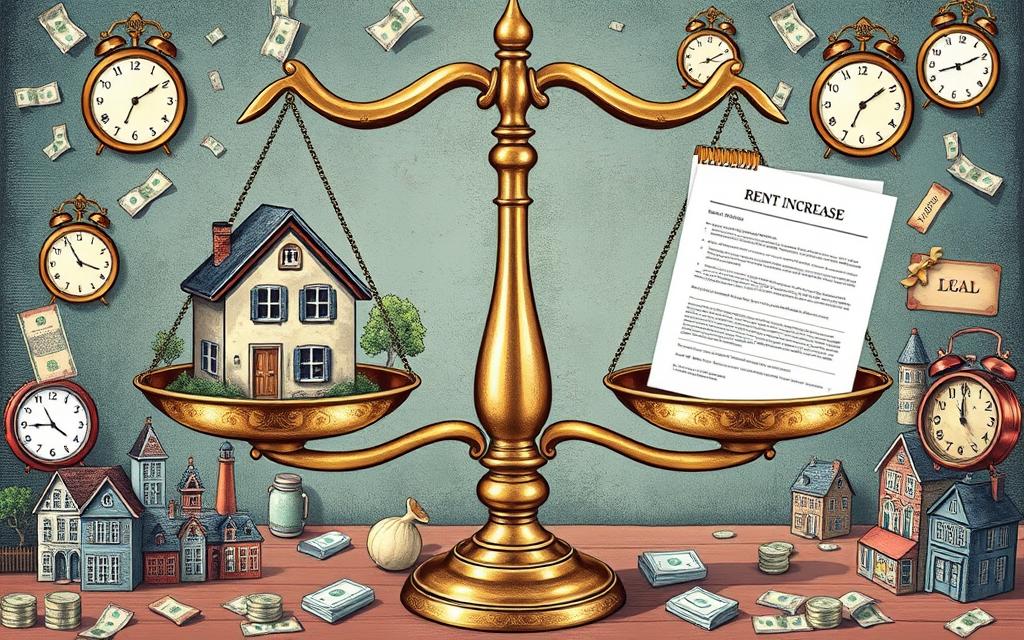
Knowing what makes a rent hike legal is important for both tenants and landlords. There are several important things to look at when checking if a rent hike is okay.
Lease Agreements and Their Terms
Rental contracts are the main rules for rent hikes. They usually say when and how rent can go up:
- Fixed-term lease restrictions
- Predetermined increase clauses
- Notice period requirements
- Limitations on frequency of increases
Local Market Conditions
The local market also plays a big role in rent hikes. Landlords need to think about a few things:
| Market Factor | Impact on Rent |
|---|---|
| Property Values | Direct correlation with possible increases |
| Inflation Rates | Typical reason for small hikes |
| Local Development | Can lead to higher rents |
Rental disputes often happen when landlords ignore local market and tenant rules. Reasonable hikes are usually 3-5% a year, matching past trends.
Landlords must find a balance between making money and keeping tenants happy. Any rent hike should be fair and backed by the local market.
Impact of Rent Control Ordinances
Rent control laws are very important in the U.S. They help keep housing affordable. They also protect renters from big rent hikes.
Overview of Rent Control in Major Cities
Every city has its own way of handling rent control. Here are a few examples:
- District of Columbia: Limits annual rent increases to 2% plus Consumer Price Index
- California: Statewide law restricts typical increases to 5% plus inflation
- Oregon: Rent increases capped at 7% plus inflation annually
- New Jersey: Over 100 cities have local rent control ordinances
Limitations Imposed by Rent Control
Rent control laws set rules for rent changes. These rules include:
- Maximum percentage of annual rent increases
- Required notice periods for rental rate changes
- Protection against discriminatory increases
- Restrictions on frequency of rent adjustments
By April 2024, 33 states don’t let local governments control rent. This shows how different rent laws can be in different places.
Landlords need to follow these rules to stay legal. Knowing the local laws is key to a good landlord-tenant relationship.
Tenant Rights Regarding Rent Increases
Dealing with rent increases can be tough for tenants. It’s important to know your rights to keep housing fair and avoid sudden money problems.
Tenants have strong ways to fight unfair rent hikes. The Tenant Protection Act of 2019 helps renters in California. It sets rules for notices and eviction risks.
Right to Challenge an Unlawful Increase
Tenants can fight rent hikes in several ways:
- Make sure the notice is legal (usually 30-60 days)
- Check if the hike is too high (no more than 10% a year)
- Look for unfair treatment
- Know about local rent rules
Resources for Tenants
There are many places to help tenants understand their rights:
- Local housing authorities give free advice
- Tenant unions offer support together
- Legal aid groups help with tough cases
- Online sites with tenant protection info
Important protections include:
- Written notice needed for rent hikes
- Protection from unfair actions
- Legal ways to fight unfair hikes
Tenants should keep records of all talks. They should also know their rights under state and local laws. This helps them deal with rent increase problems.
Consequences of Illegal Rent Increases
Landlords face a lot of rules when it comes to rent. If they raise rent without permission, they could get into big trouble. This can really hurt how they manage their rental properties.
Landlords who break the rules on rent can get hit hard. It’s important for them to know what could happen. This helps them stay on the right side of the law.
Potential Legal Ramifications for Landlords
Landlords who raise rent without permission face many legal issues:
- Tenant lawsuits challenging the increase
- Intervention by local housing authorities
- Mandatory rent refunds
- Potential license suspension
Possible Financial Penalties
Breaking the rules on rent can cost a lot of money. The costs can come from different places.
| Penalty Type | Potential Cost |
|---|---|
| Direct Fines | $500 – $5,000 per violation |
| Tenant Damages | Actual costs plus possible extra money |
| Legal Expenses | Costs for court and lawyers |
| Potential Income Loss | Loss of money from renting |
Landlords must carefully review local regulations to avoid these potentially devastating financial and legal consequences.
Role of Lease Agreements in Rent Increases
Lease agreements are key in figuring out rent hikes. They help both renters and landlords understand the rules. This makes sure everyone follows the law.
There are two main kinds of leases: fixed-term and month-to-month. Each has its own rules for when rent can go up.
Fixed-Term Lease Characteristics
- Typically spans 6-12 months
- Rent stays the same during the lease
- Rent can only go up at lease end
- It’s good for renters because rent doesn’t change
Month-to-Month Lease Flexibility
- Rent can change more often
- Landlords must give the right notice
- Notice times vary by state
- It’s more open to market changes
How much notice landlords need to give for rent hikes varies. For example, in New York City, the rules are:
| Tenancy Duration | Rent Increase Notice Required |
|---|---|
| Less than 1 year | 30 days |
| 1-2 years | 60 days |
| Over 2 years | 90 days |
Lease Agreement Amendments
Changing a lease needs careful thought. Clear talk between landlords and renters is key when talking about rent hikes or changes.
Landlords should check local laws and explain any changes in writing. This keeps things fair and good for both sides.
Communication Between Landlords and Tenants
Talking about rent increases needs clear talk between landlords and tenants. Knowing the laws and rights helps keep things good between them.
Good talk about rent changes is key. It keeps both sides happy and follows the law.
Importance of Transparency
Being open is very important. Landlords should explain rent hikes clearly. This builds trust and avoids fights.
- Provide written documentation of rent increase details
- Explain the reasoning behind the rent adjustment
- Give advance notice as required by local regulations
Strategies for Addressing Rent Increases
Landlords can talk about rent hikes in a few smart ways:
| Communication Strategy | Recommended Action |
|---|---|
| Notice Period | Provide at least 30 days written notice for month-to-month leases |
| Documentation | Include a clause allowing lease termination if tenant disagrees |
| Justification | Explain market rates and property maintenance costs |
Tenants should talk about rent hikes professionally and constructively. If the hike seems too high, check local prices and talk to the landlord nicely.
- Review your current lease agreement
- Compare local rental market prices
- Prepare a calm, fact-based discussion
Good talk can stop fights and legal problems about rent hikes.
Preparing for a Rent Increase
Dealing with rent increases needs smart planning for both tenants and landlords. Knowing about lease agreements and rent rights is key. It helps manage what to expect in rentals.

Rent increase rules change in different places. It’s important to know the local rules. Tenants should be ready and proactive when facing rent hikes.
Tips for Tenants to Prepare
- Check your lease agreement well
- Look up local rental prices
- Make a budget for possible hikes
- Know your rights as a tenant
Landlord Communication Strategies
| Communication Aspect | Recommended Practice |
|---|---|
| Notice Period | Give at least 30 days’ written notice |
| Justification | Tell why rent is going up |
| Documentation | Keep all talks clear and written |
Good talk can keep good relations between landlords and tenants when rent changes. Both should talk openly and nicely.
If rent hikes are hard, tenants might try to negotiate or look for new places. Landlords should think about keeping good tenants while keeping prices fair.
Negotiating Rent Increases
Negotiating rent increases is a challenge for both tenants and landlords. Knowing the rules of rental contracts and housing laws helps a lot in talks.
Rental markets change a lot. But, tenants have strong ways to deal with rent hikes:
- Look up what similar places rent for
- Show you’ve always paid on time
- Bring data on what others in the area pay
- Offer to sign a longer lease for a smaller increase
Best Practices for Tenants
When rent goes up, tenants should talk about it calmly. Rent increase legality changes by place, so knowing the rules is key. Good moves include:
- Bring proof of what other places charge
- Show you’re a good tenant
- Find a middle ground that works for both
- Be open to different lease terms
Strategies for Landlords
Landlords need to make money and keep tenants happy. Good ways to do this are:
- Tell tenants clearly about rent changes
- Think about how long you’ve had a tenant
- Match increases with what the market says
- Give perks for renewing leases
In busy rental markets, landlords know it’s cheaper to keep tenants than find new ones. The best talks are those where both sides win and stay happy.
When to Seek Legal Assistance
Dealing with rental disputes can be tough. Knowing when to get legal help is key. It helps protect your rights and ensures fair treatment in rental contracts.
Recognizing When You Need Legal Help
Some situations mean you need a lawyer. Look out for these signs:
- Landlord won’t fix big property problems
- Unexplained or too-high rent hikes
- Possible unfair treatment in rental deals
- Threats of illegal eviction
- Breaking local housing rules
Finding Reliable Legal Support
There are many places to get legal advice. Here are some:
- Local tenant groups
- Free legal clinics
- State housing offices
- Legal aid groups
Pro tip: Keep records of talks with your landlord. Include emails, lease deals, and any rule breaks. This info is vital if you need to go to court.
About 70% of tenant rights lawyers say get legal help for tough rental issues. Being ready and knowing your rights can help solve problems.
Conclusion: Summary of Key Points
Knowing about rental rate changes is key for a good landlord-tenant relationship. The U.S. rental market has seen big changes. In 2022, we saw how important tenant protections and landlord rights are.
Navigating rent increases needs careful attention to local laws and lease agreements.
Final Thoughts on Rent Increase Procedures
Landlords should know that rent can change, but too much can make tenants leave. Most states need a 30-day written notice for rent hikes. But, some places like Oregon and California have laws to keep rent fair.
Encouragement for Open Communication
Good rental relationships need clear talk about rent changes. Tenants should know their rights, like being able to challenge unfair hikes. Knowing local laws and talking openly helps both sides.
Knowing a lot about rent hikes is very powerful. Whether you’re a landlord or tenant, understanding the rules can protect your money.




+ There are no comments
Add yours