

Did you know 40% of California tenants lose their eviction cases by default? This happens because they don’t respond in time. Knowing your tenant rights is key to protect yourself from legal trouble.
Landlord tenant law gives renters important protections. The eviction process has strict rules. This ensures tenants are not kicked out unfairly. Only a Sheriff, Marshal, or their deputies can legally remove someone from their home. They need a court order to do so.
Tenant rights aim to balance things between landlords and renters. Landlords must give written eviction notices with enough time. This lets tenants fix problems or get ready to leave. These rights include the chance to fight an eviction, get proper notice, and stop illegal eviction attempts.
Key Takeaways
- Evictions need a formal court order and can’t be done randomly
- Tenants have the right to get written notice before eviction starts
- Legal protections stop unfair or revenge evictions
- It’s important to respond to eviction notices on time
- Knowing your rights can stop you from being wrongly kicked out
Understanding Eviction: A Tenant’s Perspective
Dealing with rental agreements can be tough for tenants. Knowing about eviction defense and legal rights is key to avoid being kicked out unfairly.
Definition of Eviction
An eviction is when a landlord legally takes a tenant out of a rental place. Tenants’ legal rights help keep people safe from being kicked out without reason.
Common Reasons for Eviction
- Failure to pay rent on time
- Violation of lease terms
- Illegal activities on the property
- Property damage
- Expiration of lease agreement
| Eviction Type | Notice Period | Legal Requirement |
|---|---|---|
| Non-Payment of Rent | 3 Days | Pay or Quit Notice |
| Lease Violation | 3 Days | Cure or Quit Notice |
| Month-to-Month Tenancy | 30-60 Days | Termination Notice |
Legal Basis for Eviction
Landlords must follow strict rules when evicting. Eviction defense begins with knowing not all eviction tries are legal. In California, landlords need a good reason and must give the right notice.
Important legal protections include:
- Right to written notice
- Chance to fix lease problems
- Shield against unfair evictions
- Protection against unfair treatment
Tenants facing eviction should keep records of all talks. They should know their rights and get legal help if needed to stop unfair eviction.
The Importance of Knowing Your Rights
Understanding tenant protections can seem hard. But knowing your rights is key to stop unfair evictions. Every tenant needs to know about eviction laws to keep their home safe.
Tenant rights are like a shield against housing wrongs. Knowing these rights lets renters protect themselves and fight bad eviction notices.
Why Tenant Rights Matter
Knowing your tenant rights is key for safe housing. These rights help renters:
- Stop illegal evictions
- Get fair treatment from landlords
- Challenge unfair eviction cases
- Keep away from unfair practices
How Tenant Rights Protect You
Tenant protections are very important. For example, landlords must follow certain rules when they send eviction notices.
| Right | Protection Detail |
|---|---|
| Notice Requirements | Landlords must give written notice, usually 3-30 days |
| Legal Hearing | Tenants can fight eviction in court |
| Discriminatory Prevention | Protection against evictions based on race, gender, or disability |
Knowing the law can really help avoid losing your home. About 62% of tenants don’t have a lawyer in eviction cases. This shows how important it is to understand eviction laws.
By learning about tenant rights, renters can face housing problems with more confidence. They can keep their homes safe from unfair eviction.
Overview of Tenant Rights in Eviction Cases
Tenants need to know their rights when facing eviction. Laws help make sure things are fair and right. They protect people from losing their homes unfairly.
Tenants have important legal protections in eviction cases. These help keep their homes safe and give them ways to fight back.
Right to Written Notice
In California, eviction notices must follow certain rules. Landlords must give clear, written notices before starting legal steps. Notices can be given in a few ways:
- Personal delivery to the tenant
- Delivery to another adult in the property
- Posting on the property and mailing a copy
Right to Contest Eviction
Tenants can fight eviction in court. They can show they followed the lease and point out mistakes by the landlord.
- Respond within the given time
- Collect supporting documents
- Plan a strong defense
Right to a Fair Hearing
Tenants get a chance to share their side in court. New laws, like Assembly Bill 2347, give them more time to respond. This helps protect them more.
Knowing these rights is key to keeping a home and dealing with legal issues in rentals.
State-Specific Tenant Rights
Understanding housing law can be hard. Rental disputes and tenant protections change a lot from state to state. It’s key for tenants facing wrongful eviction to know these laws well.
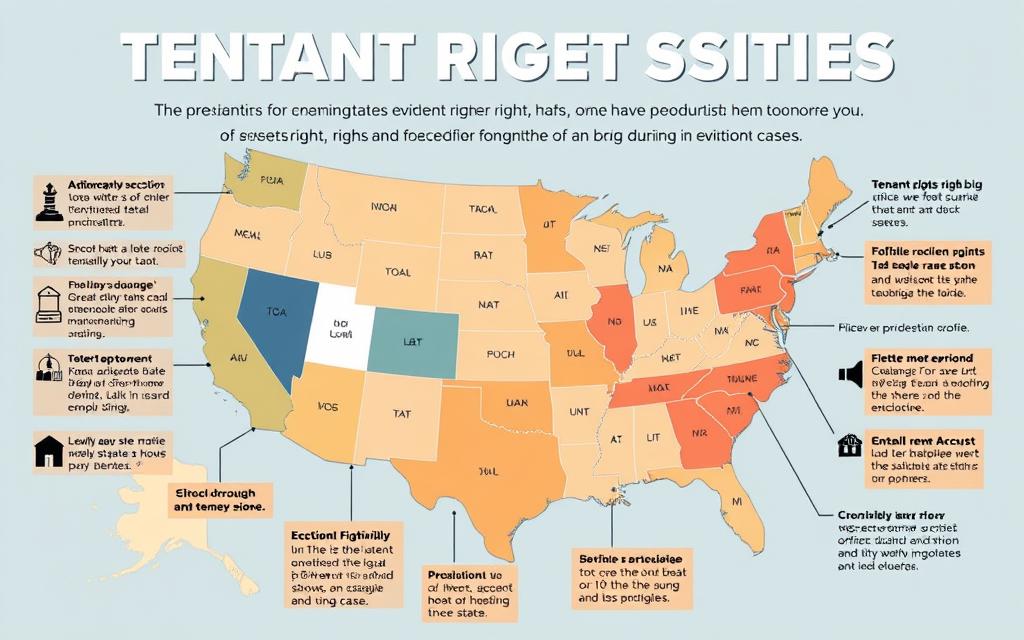
Every state has its own rules to protect renters and also consider landlords’ needs. These rules can really affect a tenant’s rights and what they can do in housing problems.
Understanding State-Level Variations
State tenant rights can be very different in important areas:
- Eviction notice rules
- Rent control laws
- Security deposit rules
- Maintenance and repair standards
Resources for State-Specific Laws
For detailed legal info, tenants should look at:
- State housing authority websites
- Local tenant rights groups
- Legal aid clinics
- State bar association resources
Pro tip: Always check for updates, as housing laws can change fast.
California Tenant Protection Example
California’s Tenant Protection Act (TPA) is a good example of state protections. It includes:
- Rent increase limits at 5-10% a year
- Rules for eviction
- Security deposit limits
- Help for evictions without fault
Knowing your state’s housing law is very important. It can help protect you from rental disputes and wrongful evictions.
Legal Procedures in Eviction Cases
Understanding lease termination needs knowing the legal steps landlords must take. Tenant disputes can get out of hand fast. It’s key to know the eviction process well.

Landlords must follow strict legal steps when starting an eviction. This process has important stages to protect both sides.
Steps Landlords Must Follow
- Provide written notice to the tenant
- File a formal complaint in small claims court
- Serve legal documents to the tenant
- Attend the scheduled court hearing
Timeframes for Eviction Notices
Each situation needs a specific notice time. An eviction lawyer can explain these times to tenants.
| Lease Violation Type | Notice Period | Legal Basis |
|---|---|---|
| Non-Payment of Rent | 10 days | N.C. Gen. Stat. § 42-3 |
| Month-to-Month Tenancy | 7 days | State Landlord-Tenant Law |
| Criminal Activity | Immediate | N.C. Gen. Stat. § 42-63 |
Knowing these steps helps tenants protect their rights when facing lease termination. An experienced eviction lawyer is key in this tough time.
Key Considerations for Tenants
- Document all communications with your landlord
- Understand your local eviction laws
- Seek legal advice if facing eviction
- Know your rights to fight the eviction
Tenant disputes are complex. Getting legal help is vital. It helps tenants know their rights and how to defend against eviction.
What to Do If You Receive an Eviction Notice
Getting an eviction notice can be very stressful. Knowing what to do can help protect your rights and keep you in your home.
When you get an eviction notice, you need to act fast. Landlords must follow the law, and you have rights too. These can help you through this tough time.
Immediate Steps to Take
- Read the eviction notice carefully and note all important details
- Verify the notice complies with local eviction process steps
- Check the specific reasons for eviction
- Determine the timeline for response
Critical Documentation Strategy
It’s very important to keep records about the eviction. Make a detailed file that includes:
- Copy of the original eviction notice
- All communication with the landlord
- Rental payment history
- Lease agreement
- Maintenance request records
| Action | Recommended Timeline |
|---|---|
| Review Notice | Within 24 hours |
| Gather Documentation | Within 3-5 days |
| Seek Legal Consultation | Within 7 days |
| Prepare Response | Before legal deadline |
About 40% of low-income tenants don’t know their rights when facing eviction. Getting legal help can cut down eviction chances by half. Being proactive and keeping good records are your best defenses against eviction.
How to Contest an Eviction
Facing an eviction can be very stressful. It’s important to know your rights and how to fight an eviction notice. This helps keep your home safe.
- Check the eviction notice for mistakes
- Collect all important documents for your case
- Know why the landlord wants to evict you
- Get help from an eviction defense attorney
Preparing Your Legal Defense
An eviction defense attorney can guide you through legal issues. You should prepare by:
- Getting all rental agreements and payment records
- Keeping records of talks with your landlord
- Keeping evidence of any property issues
- Finding legal mistakes in the eviction process
Gathering Critical Evidence
Collecting evidence is key to a strong defense. Important documents include:
- Rent payment receipts
- Letters from the landlord
- Records of any property repairs
- Statements from witnesses if needed
Every document helps show you’re a good tenant. It can make your case stronger.
Resources for Tenants Facing Eviction
Dealing with rental laws and tenant rights can feel like a maze. But, there are many resources to help. They can guide you through the eviction process and keep your home.
Legal Aid Organizations
Legal aid groups offer vital help to tenants facing eviction. They provide the support you need during this tough time:
- National Coalition for a Civil Right to Counsel offers guidance
- Local legal aid societies provide free or low-cost representation
- Nonprofit organizations like Catholic Charities and Salvation Army offer emergency housing assistance
Online Resources and Guides
Online platforms are great for learning about tenant rights and eviction. Here are some important ones:
- State court websites with eviction process information
- Government housing protection websites
- Tenant rights educational platforms
| Resource Type | Key Features | Availability |
|---|---|---|
| Legal Aid Hotlines | Free legal consultation | Statewide |
| Emergency Rental Assistance | Financial support for qualifying tenants | Local/Federal programs |
| Mediation Services | Dispute resolution alternatives | Court-affiliated programs |
Pro Tip: Don’t wait if you’re facing eviction. Many resources have limited time to apply. Early action can help a lot.
Almost 40% of tenants lose their case because they didn’t act fast. But, getting help early can be a big advantage. Remember, only about 5% of renters get legal help, while over 80% of landlords do.
The Role of Mediation in Eviction Cases
Dealing with rental disputes can be tough for landlords and tenants. Mediation is a better way than going to court. It lets both sides talk things out in a calm place.
Knowing about mediation is key in landlord tenant law. It’s a safe space for both to share their worries. They work together to solve problems.
What is Mediation?
Mediation is when a neutral person helps landlords and tenants talk things out. It’s different from court because it’s a team effort to find solutions.
- Confidential talks between parties
- A neutral person helps talk
- Flexible way to solve problems
Benefits of Mediation for Tenants
The eviction process can be hard and expensive. Mediation helps tenants keep their homes:
- It’s cheaper than going to court
- Can talk about payment plans
- May avoid eviction records
- Can keep good relations with landlord
Mediation can lead to creative solutions. It lets landlords and tenants find new ways to solve problems. This can include fixing things or making payment plans work.
Understanding Retaliatory Evictions
Retaliatory evictions are a big problem in the United States. They happen when landlords try to kick out tenants for using their rights. This includes reporting problems or complaining about living conditions.
Tenants often face big challenges when they deal with wrongful eviction. About 25% of renters are scared to report problems because they fear their landlords might get mad.
Definition of Retaliatory Eviction
A retaliatory eviction is when a landlord kicks someone out because they used their legal rights. This can be for many reasons like:
- Reporting health and safety code violations
- Requesting necessary repairs
- Complaining about bad living conditions
- Organizing tenant rights activities
Your Rights Against Retaliation
Most states have laws to protect tenants from unfair treatment. Some important rights include:
- Legal documentation of all talks with the landlord
- The right to fight an unfair eviction notice
- Money for damages if eviction is illegal
In places like California, tenants can get up to $2,000 for unfair eviction. Keeping good records helps prove retaliation and can help in court.
Seeking Legal Assistance
Going through an eviction case can be hard. That’s why getting a good eviction lawyer is key. They help protect your rights as a tenant.
Having a lawyer can really help. They make sure you get a fair chance. Studies show that tenants with lawyers do better.
It’s important to get legal help at the right time. This includes when you get an eviction notice or feel unfairly treated. A lawyer can look at your case and give you the best advice.
Seniors, people with disabilities, and renters of color need lawyers the most. They face big challenges.
Finding the right lawyer is important. Look for ones who know a lot about tenant rights. Many places offer free or cheap meetings to help you.
The Eviction Defense Project is a great example. They’ve helped over 20,000 families and won 98% of their cases.
Choosing the right lawyer can change your case. With a lawyer, you might not lose your home. It’s a smart choice when things get tough.





+ There are no comments
Add yours